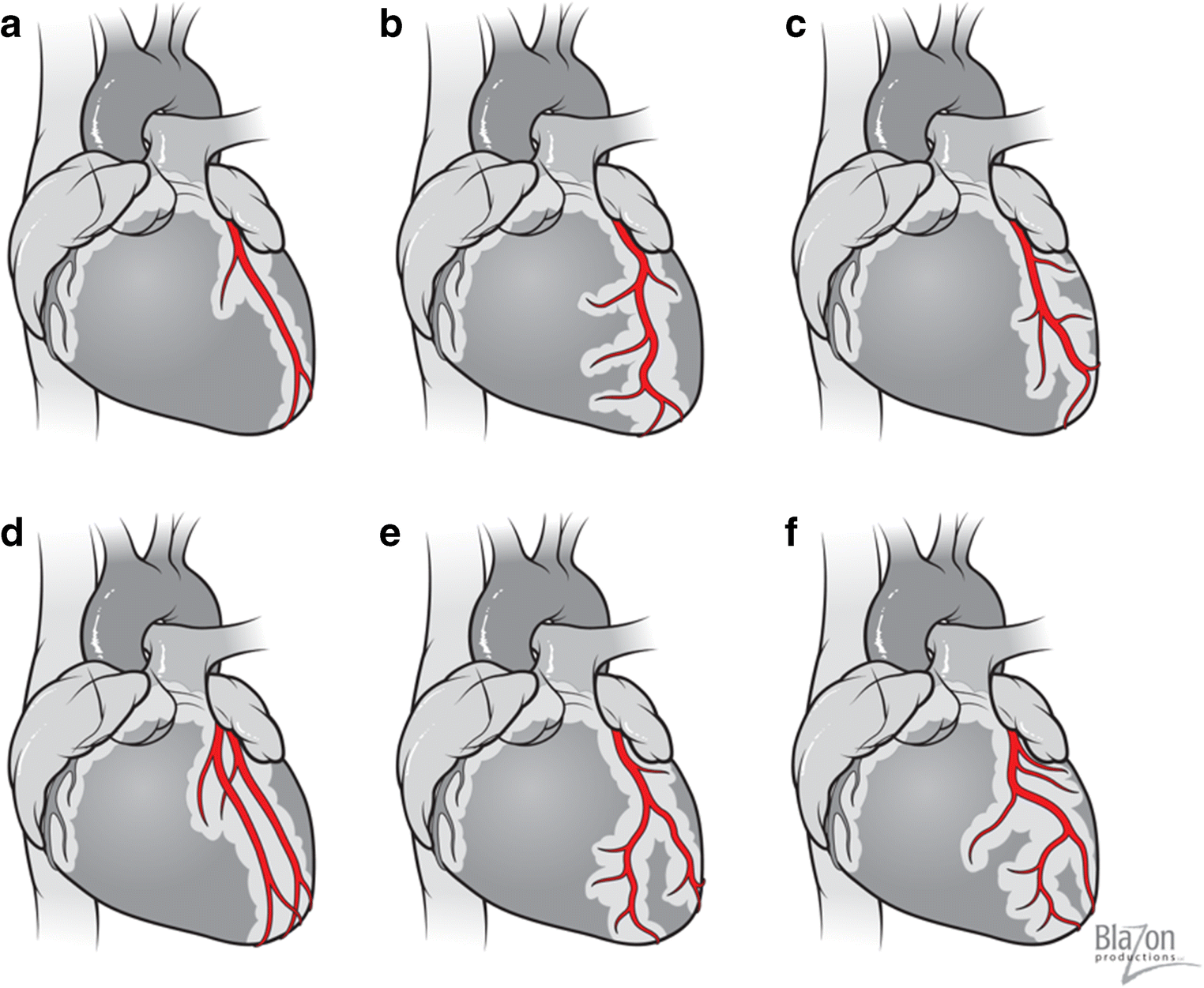
Number Of Diagonal Arteries / Number Of Diagonal Arteries Arterial Supply Of The Heart Right And Left Coronary Artery Bertawewevqepy. We finished the procedure without inflating diagonal branches when. Coronary artery disease (cad) or ischemic heart disease (ihd) are the terms used to describe narrowing of the coronary arteries. The overall size of the heart and cardiac chambers should be evaluated. The first diagonal (d1) branch tends to be the most prominent. Lv function, including ejection fraction and wall motion, should also be assessed.
They had 40 lad/diagonal branch bifurcation lesions. Most frequently, there are one or two large diagonals present, but their number may vary. Coronary arteries supply blood to the heart muscle. The diagonals initially run on the surface of the heart and therefore can be visualized by ct imaging. Most frequently there is atleast one diagonal branch.
Figure 2 Surgical And Physiological Challenges In The Development Of Left And Right Heart Failure In Rat Models Springerlink from media.springernature.com The diagonal branches had a diameter greater than 1.5 mm. Most frequently there is atleast one diagonal branch. The first diagonal (d1) branch tends to be the most prominent. Coronary artery disease (cad) is a major cause of mortality, resulting in an estimated 7.6 million deaths every year all over the world. Blockage of the lad artery significant blockages of the lad artery can be dangerous simply because the lad supplies such a large territory. When coding procedures on coronary arteries, the question of what arteries are considered coronary arteries when branches are bypassed/stented may come to mind. Additional smaller branches of the coronary arteries include the obtuse marginal (om), septal perforator (sp), and diagonals. Suggested angioplasty with 2 stent.
The total number of elements of the given matrix will not exceed 10,000.
Then codominent vessel proximal right coronary artery has 90% disease. The new guideline applies to the number of coronary arteries treated and not the number of sites treated. This third branch originates between the angle formed by the lad and the left circumflex arteries and has various names, including ramus intermediate, median artery, left diagonal artery, and straight left ventricular artery. left anterior descending artery. The right coronary artery divides into smaller branches, including the right posterior descending artery and the acute marginal artery. The coronary arteries wrap around the outside of the heart. If a ramus intermedius artery is present, the diagonal arteries are less prominent and arise more distally. If a ramus intermedius artery is present, the diagonal arteries are. Coronary artery disease (cad) or ischemic heart disease (ihd) are the terms used to describe narrowing of the coronary arteries. The lad is, for practical purposes, a continuation of the left main artery. The overall size of the heart and cardiac chambers should be evaluated. We retrospectively included 35 patients with stable angina who were treated with ses between july 2005 and december 2006. Coronary arteries supply blood to the heart muscle. Narrowing of the arteries can be caused by a process known as atherosclerosis (most common), arteriosclerosis, or arteriolosclerosis.this occurs when plaques (made up of deposits of cholesterol and other substances) build up over time in the walls of the arteries.
Coronary arteries supply blood to the heart muscle. Over 99% of people have at least one diagonal branch of the left anterior descending artery. The overall size of the heart and cardiac chambers should be evaluated. Coronary circulation is the circulation of blood in the blood vessels that supply the heart muscle (myocardium). The new guideline applies to the number of coronary arteries treated and not the number of sites treated.
Anatomy Of The Coronary Arteries Anatomical Atlas On A Coronarograph from www.imaios.com We finished the procedure without inflating diagonal branches when. Coronary artery disease (cad) or ischemic heart disease (ihd) are the terms used to describe narrowing of the coronary arteries. The maximum change in curvature is located at c 8 with a change of 0.75 mm −1. The second of the three longest branches off of the left anterior descending artery which supplies the anterolateral wall of the left ventricle. In about 80% of people, the lad wraps around the bottom of the heart and supplies the area beyond that. Coronary arteries supply oxygenated blood to the heart muscle, and cardiac veins drain away the blood once it has been deoxygenated. Collateral circulation is a network of tiny blood vessels, and, under normal conditions, not open. A reporting system on patients evaluated for coronary artery disease.
The maximum change in curvature is located at c 8 with a change of 0.75 mm −1.
The right coronary artery divides into smaller branches, including the right posterior descending artery and the acute marginal artery. Additional smaller branches of the coronary arteries include the obtuse marginal (om), septal perforator (sp), and diagonals. The new guideline applies to the number of coronary arteries treated and not the number of sites treated. Failure to visualize any diagonal artery denotes occlusion. Lv function, including ejection fraction and wall motion, should also be assessed. Coronary arteries supply oxygenated blood to the heart muscle, and cardiac veins drain away the blood once it has been deoxygenated. If a ramus intermedius artery is present, the diagonal arteries are less prominent and arise more distally. Coronary circulation is the circulation of blood in the blood vessels that supply the heart muscle (myocardium). There are multiple smaller coronary arteries that branch off from the left and right coronary artery and even the circumflex artery. Each artery is a muscular tube lined by smooth tissue and has three layers: In an rao projection, this artery often arises where the left anterior descending angles toward the apex. Time, and the number of devices. Diagonal arteries run across between the interventricular and av grooves and supply the anterior left ventricular free wall, the anterolateral mitral papillary muscle, and part of the anterior right ventricular wall.
This third branch originates between the angle formed by the lad and the left circumflex arteries and has various names, including ramus intermediate, median artery, left diagonal artery, and straight left ventricular artery. left anterior descending artery. Collateral circulation is a network of tiny blood vessels, and, under normal conditions, not open. In general, the diagonal branches are larger, longer, and have more angular takeoff from the lad artery. The second of the three longest branches off of the left anterior descending artery which supplies the anterolateral wall of the left ventricle. This allows blood to flow around the blocked artery to another artery nearby.
Is Septal Branches Of Left Anterior Descending Coronary Artery Immune To Atherosclerosis Dr S Venkatesan Md from drsvenkatesan.files.wordpress.com The new guideline applies to the number of coronary arteries treated and not the number of sites treated. The total number of elements of the given matrix will not exceed 10,000. Coronary circulation is the circulation of blood in the blood vessels that supply the heart muscle (myocardium). This allows blood to flow around the blocked artery to another artery nearby. Coronary arteries supply oxygenated blood to the heart muscle, and cardiac veins drain away the blood once it has been deoxygenated. The number of superior septal arteries ranges from 1 to 10, with an average of 4.2, and the inferior one's ranges from 0 to 7, with an average of 2. Typically, the number of diagonal and marginal branches is specified and their disease burden quantified. The overall size of the heart and cardiac chambers should be evaluated.
Collateral circulation is a network of tiny blood vessels, and, under normal conditions, not open.
The new guideline applies to the number of coronary arteries treated and not the number of sites treated. Additional smaller branches of the coronary arteries include the obtuse marginal (om), septal perforator (sp), and diagonals. This allows blood to flow around the blocked artery to another artery nearby. Lv function, including ejection fraction and wall motion, should also be assessed. Failure to visualize any diagonal artery denotes occlusion. When coding procedures on coronary arteries, the question of what arteries are considered coronary arteries when branches are bypassed/stented may come to mind. The number of superior septal arteries ranges from 1 to 10, with an average of 4.2, and the inferior one's ranges from 0 to 7, with an average of 2. Coronary arteries supply oxygenated blood to the heart muscle, and cardiac veins drain away the blood once it has been deoxygenated. This third branch originates between the angle formed by the lad and the left circumflex arteries and has various names, including ramus intermediate, median artery, left diagonal artery, and straight left ventricular artery. left anterior descending artery. Coronary artery disease (cad) or ischemic heart disease (ihd) are the terms used to describe narrowing of the coronary arteries. If a ramus intermedius artery is present, the diagonal arteries are less prominent and arise more distally. Coronary arteries are classified by number of distinct sites treated, rather than number of coronary arteries or anatomic name of a coronary artery (e.g., left anterior descending). Small branches dive into the heart muscle to.